
Seamlessly transitioning VA off of legacy login technology
The Problem
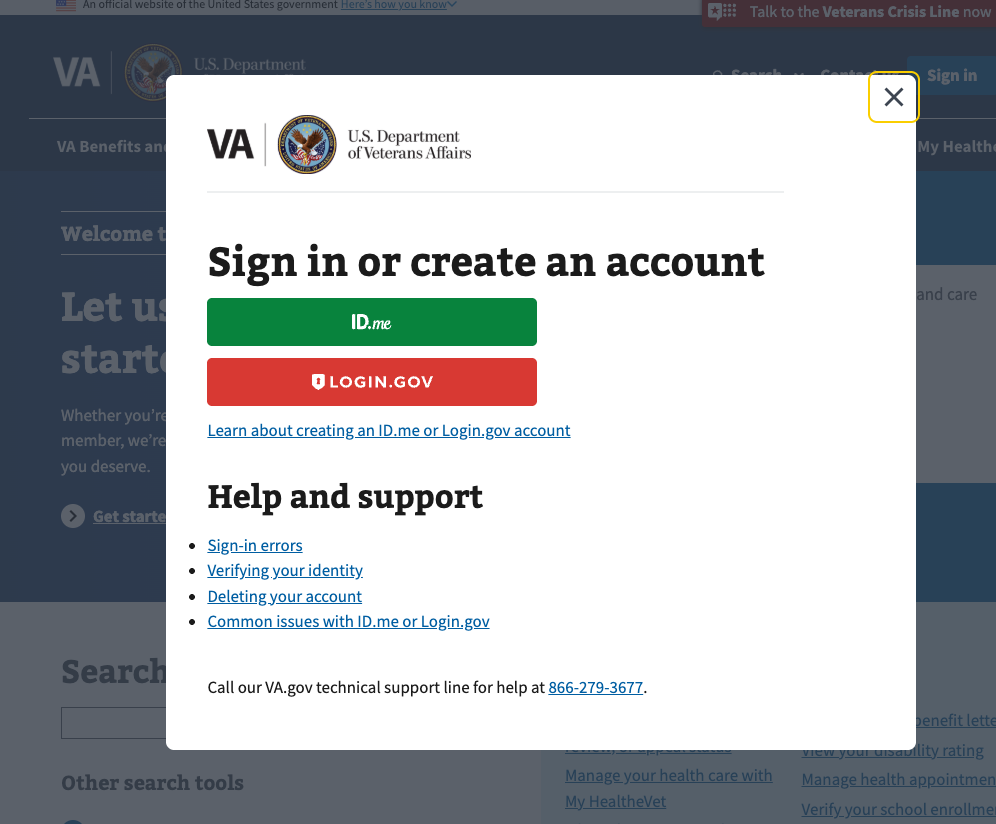
Millions of Veterans rely on VA’s digital services for critical benefits like health care and disability compensation. Yet, for years, these services were accessed through outdated legacy sign-in credentials that were vulnerable to fraud, prone to failure, and incompatible with modern security standards. To protect Veterans and ensure continued access to services, the VA planned to retire these legacy credentials in favor of Login.gov and ID.me—federally approved, secure sign-in options.
However, the VA lacked cohesive data about legacy credential usage, and lacked a plan for how to help less tech-savvy Veterans through the complex task of switching to modern credentials. Without a data-informed and user-centered strategy in place, sunsetting the legacy systems risked locking hundreds of thousands of Veterans out of their benefits.
MO’s Solution
We engineered a unified data model and streamlined disparate data across five systems (MPI, AuthDB, MHV, SSOe Splunk and DataDog) and across raw operational logs, turning it into a digestible, centralized Identity Dashboard in Domo entirely on VA infrastructure. Working collaboratively with our Product Owners, we combined the dashboard with findings from our user research with Veterans and VA staff to shape our change management strategy. We targeted communication campaigns to the areas most in need of support, using digital and in-person support in partnership with VA Health Centers to provide a Veteran-focused, human-centered experience.
Outcomes
982k+
Veterans seamlessly onboarded
67%
reduction in identity verification time.
$Millions
Saved in operational costs
Our model showed that as of January 2024, 1.27 million Veterans were still relying on legacy credentials to access their health benefits, empowering VA leadership with the data needed to target their campaigns effectively and drive adoption of modern credentials.
The insights we gleaned from Veterans during the campaigns drove digital login improvements that reduced identity verification time by 67%, saved the VA millions in operational costs, and most importantly enabled nearly one million Veterans (982,947) to transition to modern credentials in just 12 months, without disrupting their access to benefits or care.